How Cần Thơ’s University Setting Can Shape a Conversation About Casinos
A Cần Thơ university setting can sharpen a conversation about casino culture through close reading, careful claims, and questions that keep attention on the material.
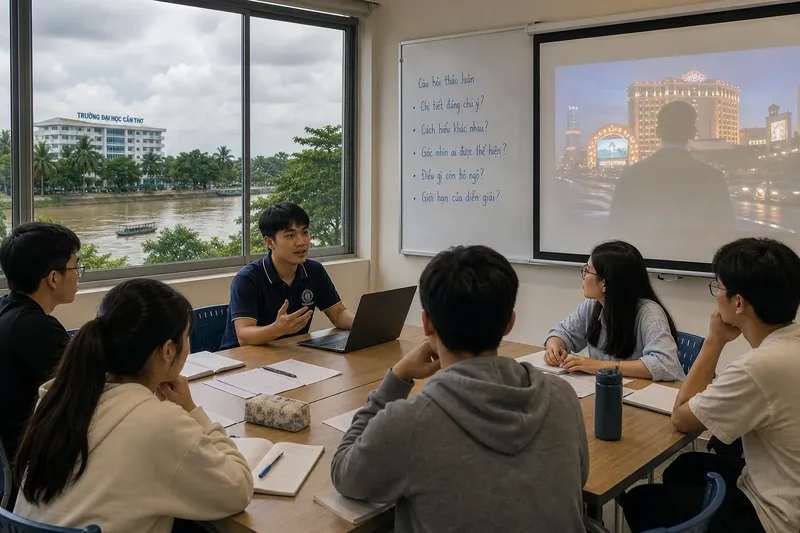
Casino culture becomes easier to discuss when a class looks closely at the language and images that make gambling seem thrilling, ordinary, or troubling. At Trường Đại học Cần Thơ, that work can draw on the university’s setting without turning a film, an advertisement, or a classroom exchange into a statement about everyone in the Mekong Delta.
The useful question is not what a place name supposedly tells us about people. It is how a particular work uses place, whose point of view it presents, and what its choices invite an audience to think.
What can Trường Đại học Cần Thơ bring to the discussion?
A university setting gives students room to compare readings of a shared text. They might examine a casino scene in a film, the wording of an advertisement, or a fictional character’s decision, then point to the details that support their interpretations.
The setting can also prompt questions about representation: Does a work give Cần Thơ or the Mekong Delta specific character, or use the name as scenery? Does it show people with different motives, or make a regional label carry the whole story? Those are questions about the work’s craft, not evidence about local casino activity.
It helps to separate three kinds of statement: what the material depicts, what a participant thinks it means, and what a speaker claims about people beyond the room. The first can be checked against the work; the second belongs to the interpretation; the third needs information suited to that broader claim.
Which details make casino culture easier to analyze?
Casino culture includes more than gambling at a venue. It also includes the stories, promotional language, humor, and images through which gambling is presented. A close reading stays useful when each interpretation is tied to something a reader can actually point to.
- Storytelling: Which character makes a choice, and what consequences does the plot show or leave out?
- Advertising language: What feeling does a slogan invite, and what details remain in the background?
- Relationships: How does the work portray trust, conflict, or obligations between people?
- Setting: Does the location affect the scene, or could the same place name be swapped in without changing it?
- Point of view: Who gets to describe the experience, and whose perspective is missing?
- Audience assumptions: Which parts of a reading come from the text, and which come from the reader?
For each point, identify a line of dialogue, an image, a character’s action, or an omission. That simple habit makes disagreement more productive: classmates can debate what a detail suggests without pretending the text settles every question.
How can a discussion avoid turning place into shorthand?
Start with the specific work and describe what it shows. “The advertisement associates the casino with excitement” is a claim about a message. “People in this region see casinos as exciting” is a claim about people, and the advertisement cannot establish it.
When a conversation shifts from interpretation to a claim about local life, pause and ask what kind of evidence would answer that question. If the material is only a film scene, keep the claim about the film. If suitable information is not available, leave the broader point open rather than filling the gap with an assumption.
This approach does not require treating every regional detail as suspect. It asks for precision: name the place as the work names it, describe the role it plays, and avoid making that single portrayal stand for the region’s varied experiences.
How can you lead a grounded classroom discussion?
Use a short sequence that keeps the conversation tied to its subject:
- Name the source. Identify the film scene, advertisement, article, or passage everyone is discussing.
- Select an observable detail. Point to a line, image, choice, or omission rather than relying on a general impression.
- State the interpretation carefully. Use wording such as “this may suggest,” then explain the detail behind the reading.
- Invite a different reading. Ask what another participant noticed, without treating either response as representative of a community.
- Check the scale of the claim. Keep observations about the work separate from claims about students, residents, or families.
- Name what remains unanswered. If the discussion raises a real-world question, say what kind of information would be needed to address it.
Imagine a seminar discussing an invented film scene: a character sees a casino advertisement during a family visit. The group notes that the advertisement promises excitement, while the scene does not show what happens afterward. One student reads the omission as a storytelling choice; another sees it as a prompt to discuss responsibility. The class records both interpretations beside the scene’s details, then leaves claims about local families aside because the fictional scene cannot answer them.
Which questions help keep casino culture in focus?
Can a class discussion represent local opinion?
It can describe the views voiced by participants in that discussion, but not the views of a wider community. Keep the wording tied to the people and material actually present.
What does the Mekong Delta setting contribute?
It can invite attention to how a work portrays place and identity. It does not, by itself, establish facts about casinos or the people who live in the region.
Can a fictional casino scene support a real-world claim?
It can support observations about the fiction’s themes, framing, and characters. A claim about actual people or conditions needs information that directly addresses those subjects.
What should happen when classmates disagree?
Ask each person to point to the detail behind their reading, then allow more than one interpretation if the material permits it. If the disagreement becomes a factual claim about a group or place, distinguish that claim from the close reading.
What is not worth adding to the conversation?
A long disclaimer every time someone mentions Cần Thơ or the Mekong Delta can pull attention away from the text. A brief, accurate phrase—such as “this is one reading of the scene”—usually makes the boundary clear without turning the discussion into a sequence of cautions.
Speculation about what students, residents, or families believe is not useful when the material in front of the class cannot answer that question. Keep casino culture discussion anchored in the work, name the limits of an interpretation when they matter, and let the regional setting raise questions rather than supply conclusions.